How long rice, canned food, flour, oats, beans, and oil actually last, which containers protect them, and how to rotate a shelf you will eat.
Shelf-life times are from USDA FSIS and FoodKeeper, checked 2026-11-05. They are quality and storage windows, not a safety guarantee. When in doubt, discard.
Quick answer
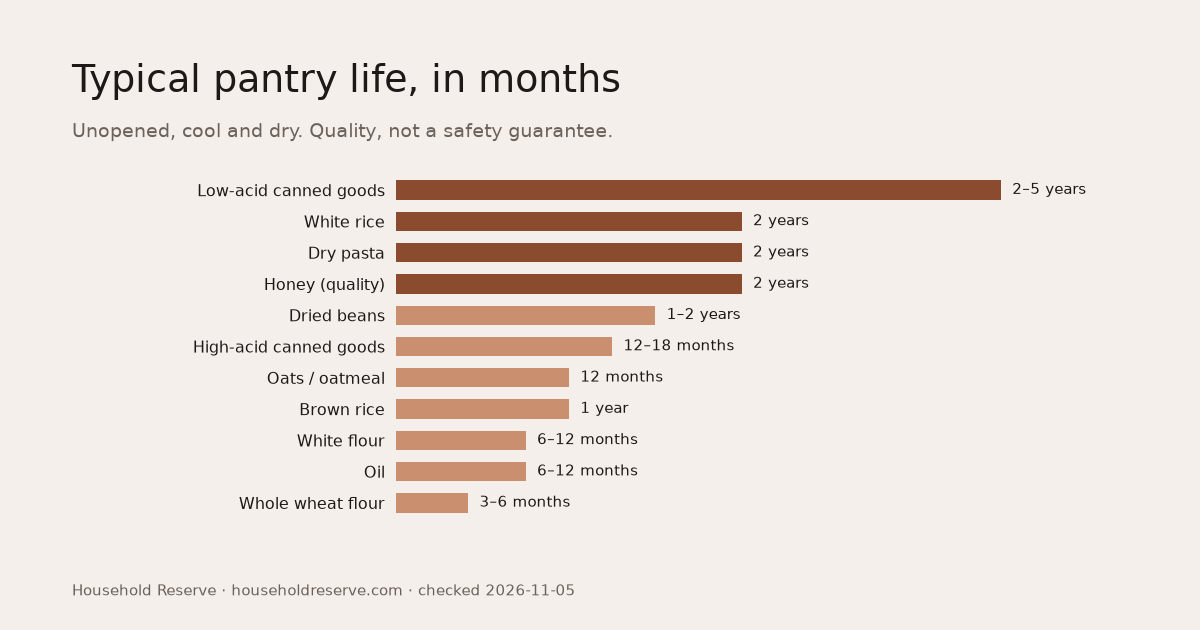
Most pantry staples keep 1–5 years unopened. White rice and dry pasta are about 2 years; low-acid canned goods 2–5 years; high-acid canned goods 12–18 months; white flour 6–12 months; whole-wheat flour 3–6 months. Cool, dark, dry, and sealed is the rule. Rotate what you store, and discard damaged cans.
The number on the package is a quality date, not a switch that makes food unsafe the next day. The container, temperature, moisture, oxygen, and pests matter more than the year alone.
Shelf life by food
These are typical unopened pantry times. A cool, dark, dry shelf at the low end of the temperature range can stretch them; a hot garage or a damp basement can shorten them.
Typical pantry life for an intact, unopened package. FSIS = USDA Food Safety and Inspection Service; FoodKeeper = USDA FoodKeeper pantry data.
Typical unopened pantry life, in months. Quality, not a safety guarantee; storage conditions move the number.
Dry milk, salt, and spices are not given a single number here because the package, moisture, and storage conditions vary. Follow the package date for dry milk and keep salt and spices dry.
What actually limits shelf life
Temperature. FSIS says storage below 85°F is best; USU Extension calls below 65°F helpful. Heat speeds up rancidity, can corrosion, and vitamin loss. Do not store food above or beside the stove, under the sink, or in a hot garage.
Moisture and oxygen. Dry staples pick up moisture and oxygen, which drives mold, caking, and rancidity. A tight, food-grade container is part of the shelf life.
Light. Light degrades oils and some vitamins. Keep food in the dark or in opaque containers.
Pests. Insects and rodents find flour, rice, and beans. Keep food off the floor, in tight containers, and clean up spills.
Container condition. A bulging, leaking, rusted, or deeply dented can is not a shelf-life question; discard it.
Containers and packaging
The best container is food-grade, airtight, pest-proof, and easy for your household to use. A container you cannot open, move, or rotate is not storage; it is a monument.
Container options for dry staples. “Long-term” means a cooler, darker shelf with a better barrier, not an unconditional number of years.
Container
Best for
Strengths
Watch out
Original package
Short- and medium-term pantry
Cheap, labeled, easy to rotate
Not pest-proof once opened; transfer to a tight container
Food-grade bucket + lid
Bulk grains and beans
Stackable, durable, easy to move
Use a food-grade liner; heavy when full; not airtight alone
Mylar bag + oxygen absorber
Dry, low-fat staples for longer storage
High oxygen and moisture barrier
Follow the manufacturer; not for high-fat foods; not a 25-year guarantee
Glass jar
Small amounts you rotate
Inert, pest-proof, visible
Breakable and heavy; keep out of light
#10 can
Dry goods and long storage
Strong barrier, stackable
Once opened, use or transfer; finite supply
Vacuum-sealed bag
Small amounts of dry food
Removes oxygen, saves space
Not pest-proof alone; edges can puncture
Mylar bags and oxygen absorbers are useful for dry grains and beans, but the 25- to 30-year numbers are manufacturer claims for a specific package and storage condition. They are not a USDA guarantee. Follow the manufacturer’s instructions, keep the package cool and dry, and do not use oxygen absorbers with high-fat foods that can go rancid.
Do not reuse buckets or jars that held chemicals, paint, or cleaning products. A food-grade liner is not a substitute for a food-grade container if the outside is contaminated.
What not to store long-term
High-oil foods. Nuts, seeds, whole grains, and brown rice go rancid faster than white rice or dry beans. Store smaller amounts and rotate them.
Home-canned food beyond 12 months. FSIS gives home-canned food a 12-month pantry life and says to boil it before use: 10 minutes for high-acid foods, 20 minutes for low-acid foods.
Damaged cans. Bulging, leaking, rusted, or deeply dented cans are not worth the risk.
Food your household will not eat. A reserve you do not want to eat is not a reserve. Buy what you already cook.
Giant packages you cannot rotate. A 50-pound bag is cheap per pound and expensive per wasted pound if it sits in a hot garage.
Rotation: first in, first out
Date every lot when it comes home. Put the oldest food in front and the newest in back. Once a month, spend ten minutes checking dates, moving the front forward, and planning meals around what is close to its date. The goal is not a museum shelf; it is a shelf that empties and refills.
USDA FSIS gives low-acid canned goods (meat, beans, corn, peas, soup) 2 to 5 years in the pantry, and high-acid canned goods (tomatoes, fruit, pickles) 12 to 18 months. Those are quality windows for an intact can. Discard bulging, leaking, rusted, or deeply dented cans.
How long does rice last?
White or wild rice keeps about 2 years in the pantry; brown rice about 1 year because the bran oil goes rancid. Dry pasta also keeps about 2 years. Keep all three cool, dark, dry, and sealed.
Do oxygen absorbers make food last 25 years?
Not by themselves. The 25- to 30-year numbers are manufacturer claims for specific packaging, oxygen levels, and storage conditions, not a USDA guarantee. Oxygen absorbers help with dry, low-fat staples such as grains and beans; follow the manufacturer's instructions and keep the food cool and dry.
What containers are best for long-term storage?
Use food-grade, airtight, pest-proof containers: a food-grade bucket with a lid and liner, a sealed Mylar bag with an oxygen absorber for dry staples, glass jars for small amounts you rotate, or #10 cans. Do not reuse containers that held chemicals, and do not rely on trash bags or non-food-grade plastic.
What should I not store long-term?
High-oil foods such as nuts, seeds, whole grains, and brown rice go rancid; home-canned food is a 12-month item per FSIS; damaged cans are not safe; and food your household will not eat is not a reserve. Store what you eat and rotate it.
Sources and assumptions
The shelf-life windows are from USDA FSIS and FoodKeeper, checked 2026-11-05. The container guidance is from USU Extension and the same sources. This page is not a food-safety certification.
External sources used on this page. Open a source to read the current version.